Dating in Oxfordshire That Is Actually Local

Meet Oxfordshire singles based on the journeys you can realistically make, not a generous radius drawn around your postcode.

You find someone interesting, exchange a week of messages and suggest a drink. Then the catch appears. They are “near Oxford”, but getting there would mean an hour in the car or a last bus home before the conversation has properly started.

Date Oxfordshire Singles puts practical distance first. Search across Oxford, Abingdon, Didcot, Banbury, Bicester, Witney and the surrounding areas, then decide what local means for your life.

Because a promising date should not require the planning of a day trip.

Why dating in Oxfordshire is more local than it looks

Oxfordshire is compact on a map. Living here tells a different story.

Oxford itself contains several social worlds that sit close together without naturally mixing. University life has its own calendar and gathering places. NHS staff around Headington work irregular hours. Long-term residents in Cowley, Rose Hill and Marston may have little contact with the graduate and professional circles associated with Jericho or Summertown. Two single people can live three miles apart for years and never have an obvious reason to meet.

Beyond the city, the county breaks into distinct corridors. Abingdon, Didcot, Harwell, Milton Park and Culham form a busy employment belt, yet colleagues often commute in from different directions and leave as soon as the working day ends. Bicester faces towards Oxford for some people and towards Buckinghamshire for others. Banbury has its own social centre and stronger links northwards. Witney, Carterton and the smaller west Oxfordshire communities operate on another pattern again.

Then there are the villages. A place may be only twelve miles away, but that distance means something quite different if neither person drives and the evening bus service is thin. The A34 can turn a simple plan into a late arrival. Oxford traffic can make a short cross-city journey feel longer than a train ride from Didcot.

A county boundary tells you where someone lives administratively. It does not tell you whether seeing them on a Wednesday evening is realistic.

This is why dating in Oxfordshire works better when profiles give a useful general location. “Based near Banbury and working in Bicester” says far more than “Oxfordshire”. You do not need to reveal your street, employer or exact village. A town, side of Oxford or broad area gives another person enough information to judge whether meeting could work.

Do not dismiss somebody purely because they sit just outside the county either. If you live near Thame, a person over the Buckinghamshire border may be easier to see than someone in Witney. Near Henley, the same may be true of a Berkshire resident. Local dating is about the real journey, not rigid loyalty to a line on the map.

How to find Oxfordshire singles who fit your real life

Before setting a search distance, look at an ordinary week. Where do you already go? When are you free? How late can you comfortably travel home? These questions sound unromantic, but they prevent a common problem: building a warm connection with somebody whose life never quite overlaps with yours.

A person living in Kidlington and working in central Oxford may reasonably search both areas. Someone based in Wallingford but commuting to Harwell might find Didcot practical too. By contrast, a parent with alternate-week childcare in Chipping Norton may need a much tighter radius, however willing they are in principle to travel.

There is no ideal number of miles. Ten miles on a direct train line can be easy; ten miles across rural roads without a car can be a nuisance. Think in journey times instead.

A strong profile is specific without becoming a CV. “I enjoy music, travel and food” is true of half the county and gives a reader nowhere to begin. “I spend Saturdays walking near the Ridgeway, followed by an overly large pub lunch” creates an opening. It also reveals something about how you actually spend your time.

Photographs should be recent, recognisably you and varied enough to give a fair impression. One clear head-and-shoulders image and one natural full-length picture are more useful than six group shots. Check backgrounds before uploading. A work pass, house number, child’s school badge or car registration can disclose more than intended.

When somebody interests you, refer to the profile rather than sending a generic greeting. Ask one easy question. Keep it light, but not empty. If replies flow, establish location and practical availability before weeks pass. “Are you Banbury based, or further out?” is a normal question. So is “Do you tend to meet in Oxford, or closer to home?”

Being direct is not the same as conducting an interview. You are simply checking whether two lives can meet in the middle.

Moving from online conversation to a safe local date

The first task is not to impress each other. It is to establish that the person behind the profile behaves consistently and respects boundaries.

Keep early messages on the dating service while you get a feel for the conversation. Moving to private messaging is a reasonable step later, but pressure to do it immediately deserves caution. The same applies to requests for your surname, workplace, home address or detailed daily routine. A genuine person should understand why you do not hand those over to a stranger.

Scam attempts are not always clumsy. Some develop slowly, using regular messages and apparent vulnerability to build trust. The decisive warning sign is usually a request involving money or access: a loan, travel fare, gift card, investment, bank transfer, parcel fee or help moving funds. Do not pay. A person can sound convincing and still be lying.

Other warning signs include stories that change, repeated excuses for avoiding a call or meeting, highly intense declarations before you know each other, and answers that reveal no believable knowledge of the area they claim to live in. One odd reply proves little. A pattern matters.

When you are ready to meet, keep the first plan simple:

  1. Choose a busy public venue with staff and other customers around.
  2. Meet there rather than accepting a lift or sharing your home address.
  3. Tell a friend where you will be and when you expect to finish.
  4. Keep control of your drink and arrange your own journey home.
  5. Set a modest first meeting, such as coffee or one drink, with the option to stay longer.

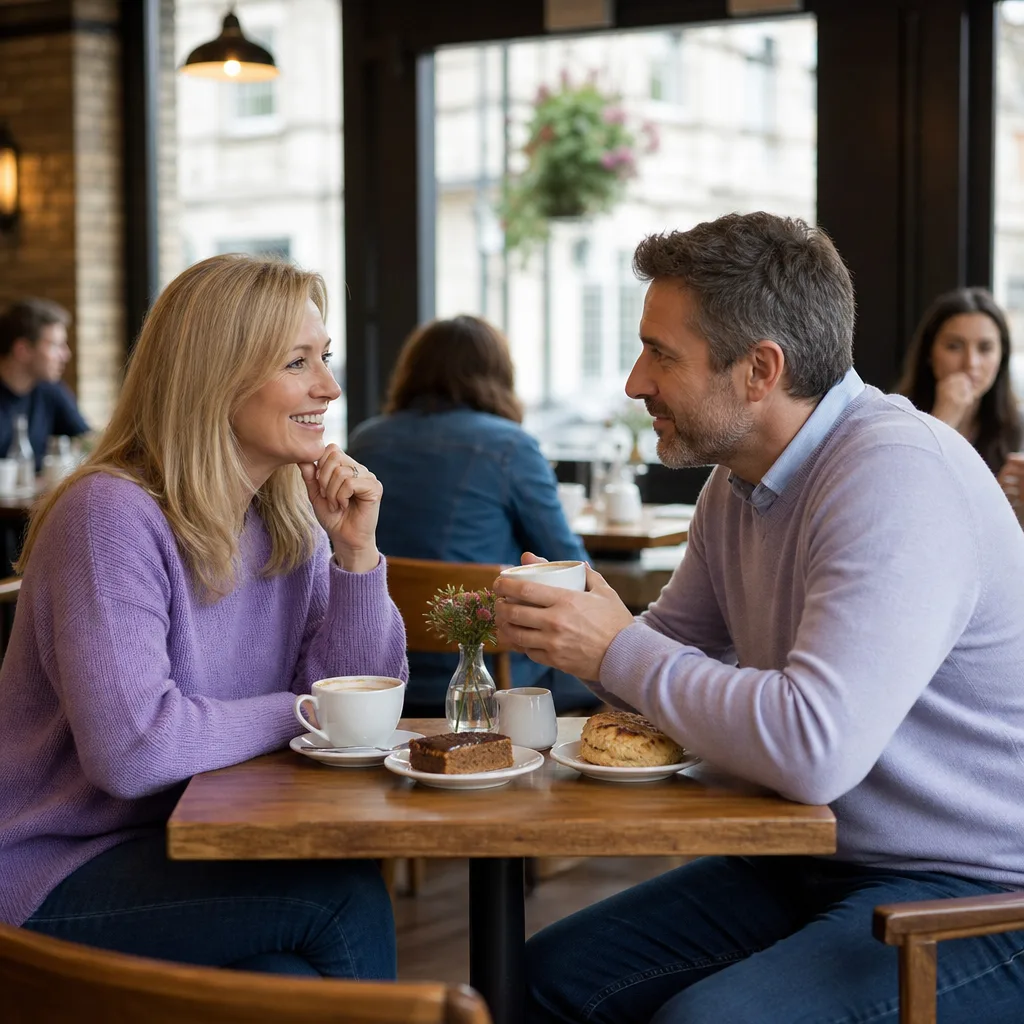
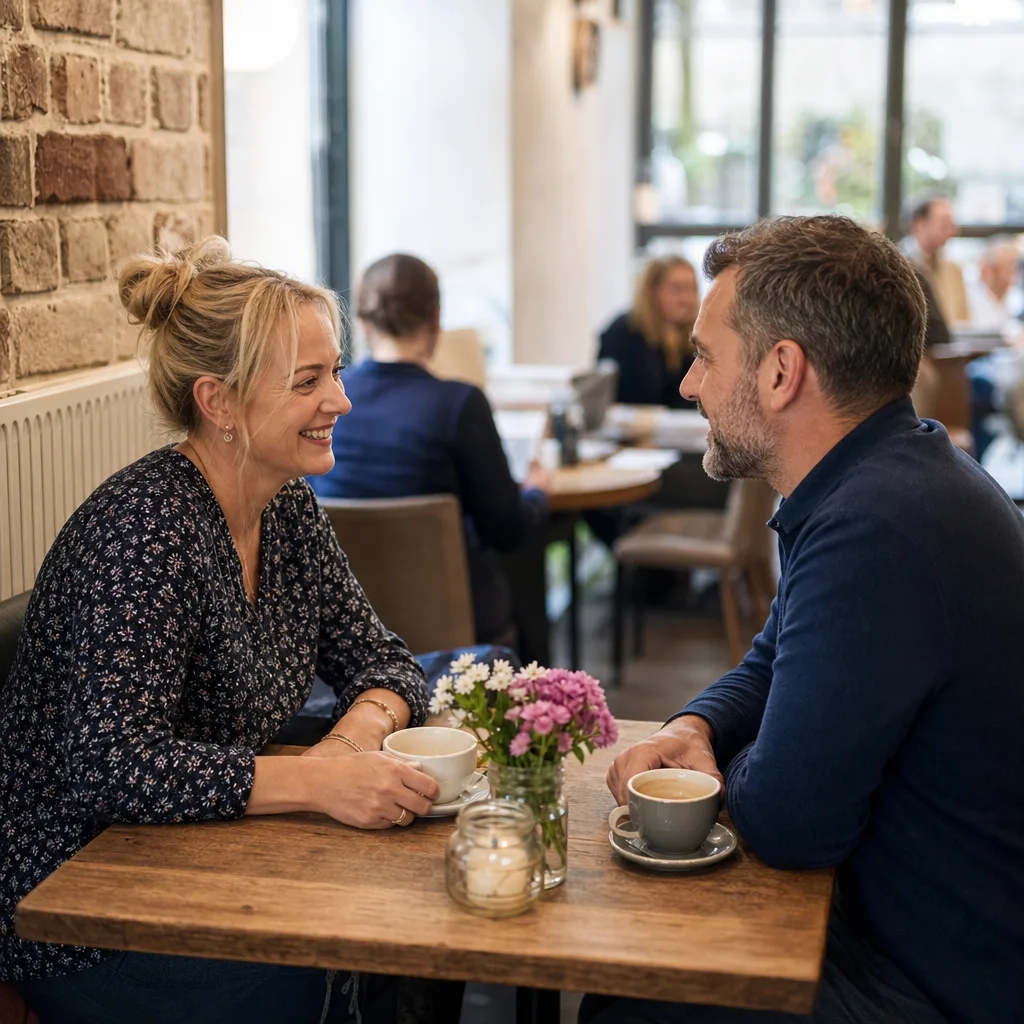
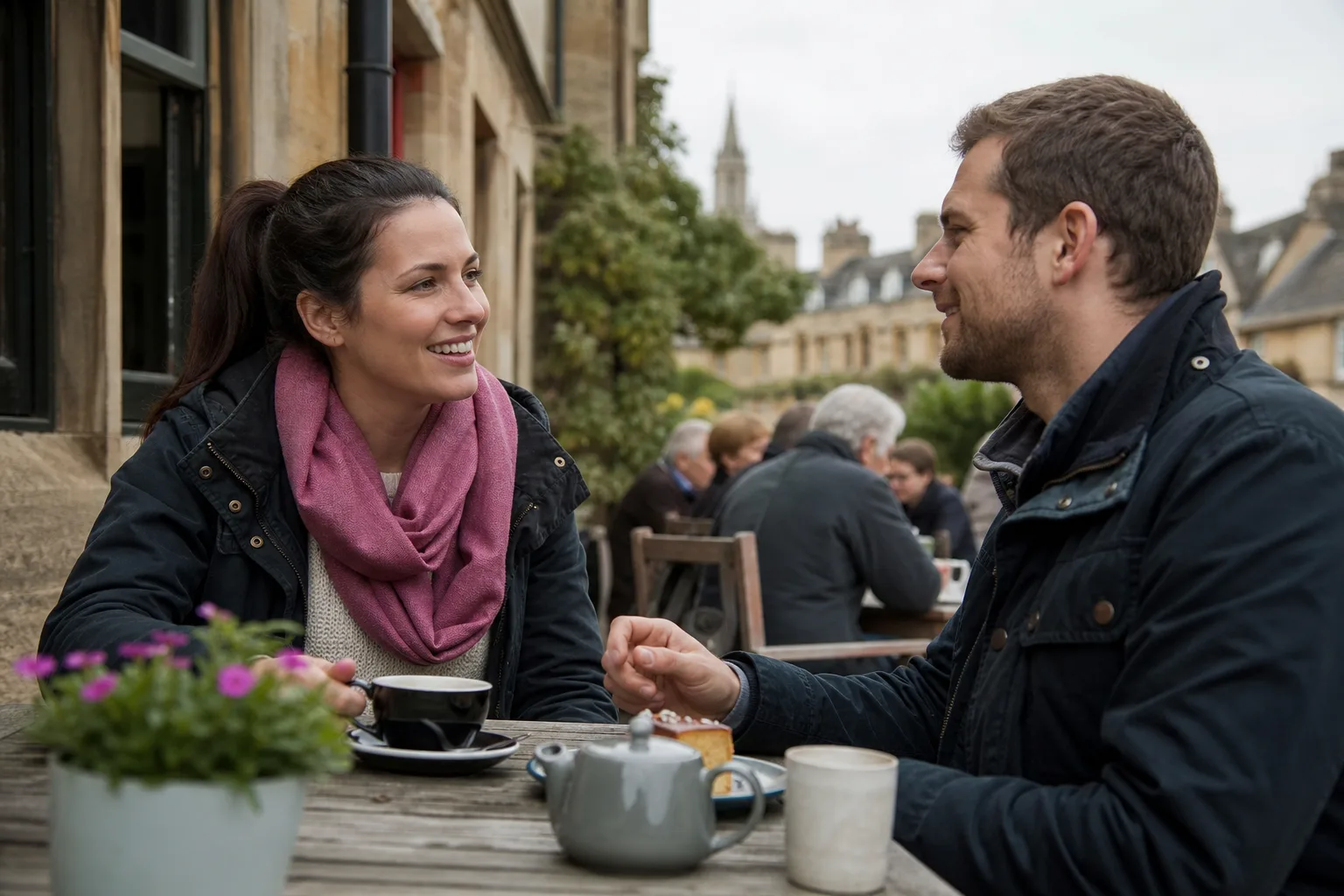
Central Oxford can suit two people arriving by bus or train, although it is not automatically convenient for everyone. Cafés in Abingdon, Banbury, Bicester, Didcot or Witney may make much more sense if both people live nearby. Daytime meetings are often easier for anyone returning to dating after a long relationship because they feel less loaded and are simpler to end politely.

If the meeting does not feel right, you owe courtesy, not a second date. A short message saying you did not feel the connection you were looking for is enough. If someone ignores a refusal, becomes aggressive or makes you uneasy, stop contact and use the service’s blocking and reporting tools.

Online dating is only one route. Walking groups, sports clubs, evening classes, volunteering and events can widen your circle without making every interaction about dating. Our practical guide to where to meet singles in Oxfordshire covers local settings and how to choose something you will still enjoy if no romantic connection appears.

Meet people closer to home

Create a straightforward profile, search the parts of Oxfordshire that fit your week and begin with one genuine conversation.