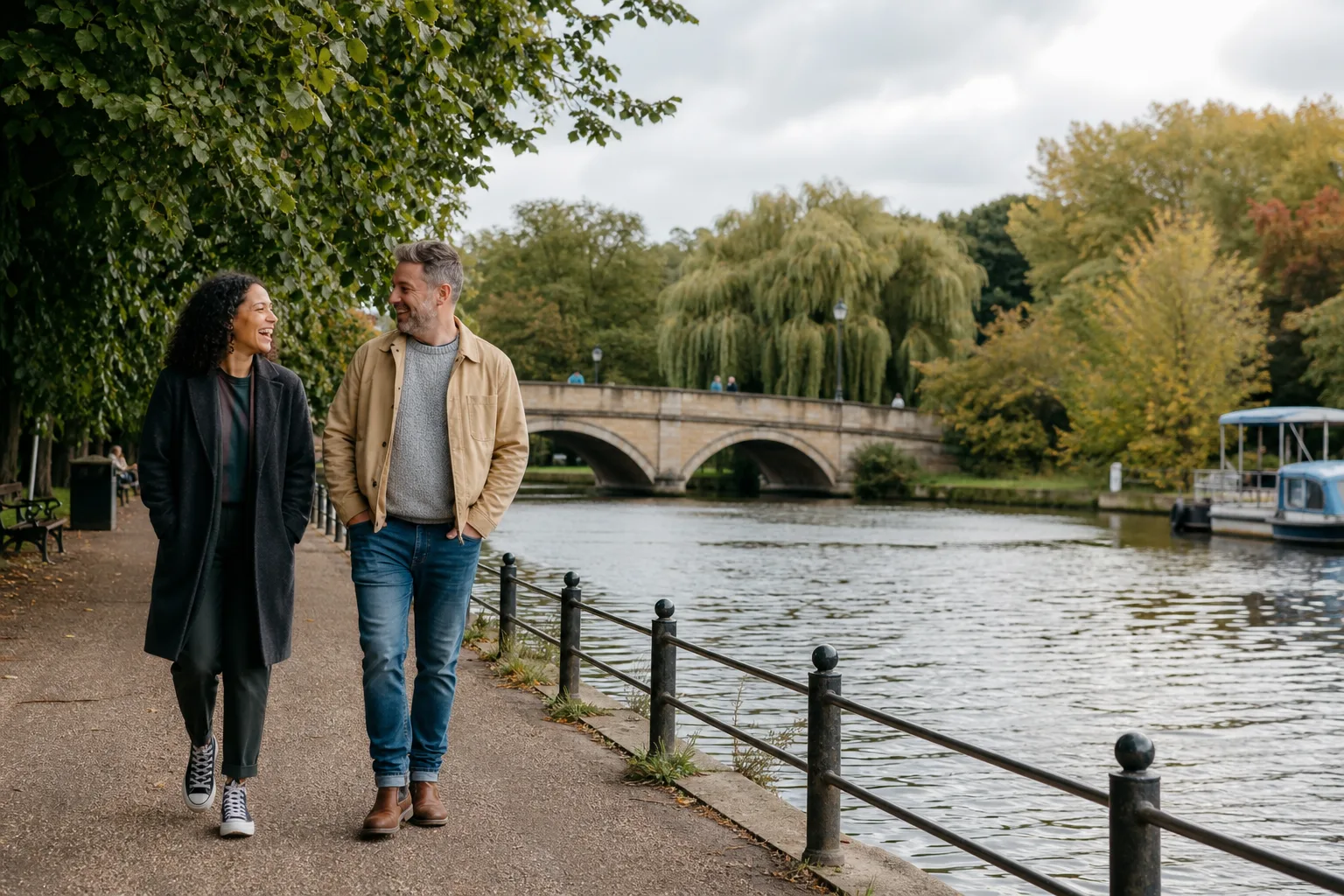
Date locally, with safety built into every step

Straightforward dating safety tips for Oxfordshire singles, from writing your profile to reporting suspicious behaviour.

A match says they live in Oxford, yet cannot name the part of town. Their photos look polished, their messages become intense within two days, and there is always a reason they cannot meet. Is that merely an awkward start, or something more calculated?

Most conversations on dating sites do not end in fraud or danger. Still, a little scepticism is useful. Online dating asks you to make judgements about a stranger using a handful of pictures and messages. That is like viewing a house through the letterbox: you can learn something, but not enough to hand over the keys.

Safe online dating in Oxfordshire is not about assuming everyone is dishonest. It is about revealing trust gradually. You keep personal details private until they are needed, look for consistency rather than charm, and arrange early dates so either person can leave easily. These habits work whether you are dating in Oxford, Banbury, Bicester, Witney, Abingdon, Didcot or a village where public transport stops early.

What does safe online dating actually involve?

Safe online dating means protecting your identity, checking that a person's story is consistent, keeping control of communication and choosing public first meetings.

Safety starts before the first message. Look at how an Oxfordshire dating site handles profiles, blocking, reporting, privacy and payments. Clear terms matter. So does a visible way to cancel. A free profile should not quietly become a paid subscription without your informed agreement, and safety tools should never be treated as a luxury extra.

The central rule is simple: trust should grow at roughly the same speed as evidence. A pleasant chat is evidence that somebody can hold a pleasant chat. It is not proof of their identity, intentions, employment or circumstances.

  • Protect identifying details. Keep your home address, workplace, daily routine and financial information out of your profile.
  • Stay on the platform at first. Site messaging preserves reporting options and avoids exposing your telephone number too early.
  • Check for consistency. Notice whether locations, work patterns, family details and photographs form a believable whole.
  • Plan independent meetings. Travel separately, meet in public and retain your own way home.
  • Act on discomfort. You do not owe a stranger another message, explanation or meeting.

If proximity is your main concern, use location filters carefully and read our guide to finding singles near you. Nearby is useful, but never let a shared postcode substitute for ordinary caution.

Profiles, privacy and choosing a trustworthy service

Your profile has two jobs. It should give compatible people enough to begin a real conversation, while withholding details that would let a stranger identify your front door, employer or routine. Good profiles are specific about personality and broad about logistics.

How do I create a trustworthy dating profile without giving too much away?

Use recent, recognisable photographs and honest personal details, but leave out information that pinpoints your home, workplace or daily movements.

Write about the things somebody could reasonably discuss on a first date: the kind of weekends you enjoy, whether you prefer a quiet pub to a crowded bar, or why you keep returning to the Ridgeway. You can say you work in scientific research near Didcot without naming the laboratory, building or shift pattern. You can say you live west of Oxford without naming your road.

Recent photographs build confidence. Choose clear images that show your face and broadly reflect how you look now. Avoid using only group photographs, old wedding pictures cropped at the shoulder, or images so heavily filtered that meeting becomes an identity test. Check the background too. A house number, staff badge, school logo, vehicle registration or addressed parcel can reveal more than you intended.

  • Be accurate about availability. If childcare, caring duties or shift work affect when you can meet, say so in general terms rather than publishing a timetable.
  • Describe relationship intentions plainly. Looking for a committed relationship, companionship or occasional dates are all valid; ambiguity causes avoidable friction.
  • Do not publish contact details. Keep your surname, personal email, telephone number and social-media accounts private at first.
  • Review old photographs. Images reused from public social accounts may be traceable through reverse-image search.
  • Respect other people's privacy. Do not include identifiable photographs of children, relatives, former partners or colleagues without permission.

A trustworthy profile need not read like a witness statement. Warmth is allowed. The aim is to be open about who you are without handing an unknown person a route into the rest of your life.

How can I judge an Oxfordshire dating site or app?

Choose a service with clear prices, accessible reporting and blocking tools, understandable privacy controls and straightforward cancellation terms.

Read the payment page before entering card details. Check the length of the subscription, whether it renews automatically, how much renewal costs and where cancellation takes place. Take a screenshot or save the confirmation. If a service makes joining effortless but hides cancellation behind several menus, treat that as a warning about the operator, not a test of your technical ability.

Privacy settings vary. Look for controls over profile visibility, location precision, message permissions and notifications. A dating service may need an approximate location to suggest relevant people; another member does not need your live position. If distance is shown, remember that repeated checks can sometimes reveal patterns, particularly in a small village.

Communication optionPrivacy benefitMain limitation
Dating-site messagesKeeps your number private and supports in-platform reportingNotifications may be slower or less convenient
Separate dating emailKeeps dating correspondence away from work and personal accountsEmail headers and account names still need checking
Telephone callHelps you assess conversation before meetingReveals your number unless you use privacy settings
Video callOffers a useful identity and comfort checkCan reveal your home, family or workplace in the background

Check what happens when you block somebody. A proper block should stop direct contact. Reporting should be available from the profile or conversation, not buried in a general contact form. Verification can add evidence, but a tick or badge is not a character reference. Accounts can be compromised, documents can be misused and verified people can still behave badly.

A safety feature reduces one particular risk. It never removes the need for judgement.

Oxfordshire is socially fragmented in a way that matters here. Someone living in east Oxford may rarely cross paths with somebody in the Didcot research belt, while Banbury and Witney have their own routines and meeting places. Local matching makes meeting practical, but profiles should still be assessed on conduct, not simply on whether someone can mention the A34.
Person checking privacy controls on an online dating profile

Messages, identity checks and scam warning signs

The most useful messages are not necessarily the funniest. They are the ones that slowly establish whether the person is consistent, respectful and willing to meet under normal circumstances. Scammers often try to outrun that process by manufacturing urgency.

What are the main romance scam warning signs?

Common romance scam warning signs include rapid emotional intensity, repeated excuses not to meet, inconsistent personal details and any request involving money, accounts, investments or gift cards.

No single odd message proves fraud. People travel, dislike video calls and sometimes explain themselves badly. Look at the pattern. A scammer's story often moves quickly from affection to crisis: a frozen bank account, medical emergency, customs charge, business problem or journey that cannot be completed without your help.

Never send money, gift-card codes, cryptocurrency, bank access details or identity documents to somebody you know only through dating contact. Do not move money on their behalf either. Receiving and forwarding funds can draw you into criminal activity even if you believed you were helping.

  • Instant devotion. Strong declarations arrive before enough ordinary conversation has taken place to support them.
  • Permanent unavailability. Work, military service, offshore contracts or family emergencies repeatedly prevent an ordinary call or meeting.
  • Scripted replies. Answers ignore your question, repeat phrases or sound unlike the person's earlier writing.
  • Changing biography. Their age, location, job, bereavement, family or travel plans shift when questioned.
  • Financial grooming. They introduce investment platforms, trading tips, loans, parcels, fees or a temporary need for funds.
  • Pressure to leave the site. They quickly demand contact through private messaging where moderation and reporting are weaker.
  • Secrecy. They discourage you from mentioning the relationship to friends, relatives or your bank.

Investment-led romance fraud can be especially slow. The person may spend weeks building trust, then suggest a platform where they appear to make successful trades. The numbers on screen can be fiction. A small withdrawal may even be allowed to create confidence before larger deposits are demanded.

How can I check that a match is genuine?

Confirm identity gradually by asking natural follow-up questions, checking photographs and arranging a brief live call before meeting.

Start with conversation, not interrogation. If somebody says they live in Banbury, ordinary details should emerge naturally over time: broad travel habits, familiar areas and realistic meeting suggestions. Do not rely on trivia quizzes. A scammer can search for Castle Quay as easily as anyone else, while a genuine newcomer may know little about the town.

  1. Read the whole profile. Compare the stated age, location, work, relationship aims and photographs for obvious contradictions.
  2. Ask open questions. Invite fuller answers about weekends, work or interests rather than questions that can be answered yes or no.
  3. Check image reuse. A reverse-image search may show whether a photograph belongs to a public figure, stock library or unrelated account.
  4. Suggest a short call. A telephone or video conversation can confirm that the person communicates live, though it cannot prove everything they claim.
  5. Keep the first meeting ordinary. A genuine local person should normally accept a brief public meeting without requiring money, transport or accommodation from you.

Practical tip: before a video call, face a blank wall or use a neutral background. Remove visible post, family photographs, workplace passes and anything showing an address. A ten-minute call is enough; you do not need to give a stranger a tour of your home.

If they refuse video, consider context. Some people feel self-conscious, have poor broadband or lack a private room. Offer a telephone call instead. The concern is not one refusal; it is an endless chain of reasons why no form of live, verifiable contact is possible.

Be careful when checking somebody online. Public records and social profiles can support parts of a story, but names are shared and online information can be wrong. Do not contact their employer or family, create a false account to test them, or treat online searching as permission to monitor them. Safety does not require surveillance.

When should I block or report someone?

Block or report a member when they threaten, harass, impersonate, solicit money, send unwanted sexual content or repeatedly ignore a clear boundary.

You do not need courtroom-level proof. Reports allow the service to compare behaviour across accounts and conversations. Include the profile name, dates, screenshots and a concise description. Preserve evidence before blocking if you can do so safely, because the conversation may then disappear from your view.

Ordinary rejection is different from abuse. A polite conversation that simply goes nowhere rarely needs reporting. Repeated contact after you have said no, attempts to find you on other platforms, threats, blackmail and demands for intimate images do.

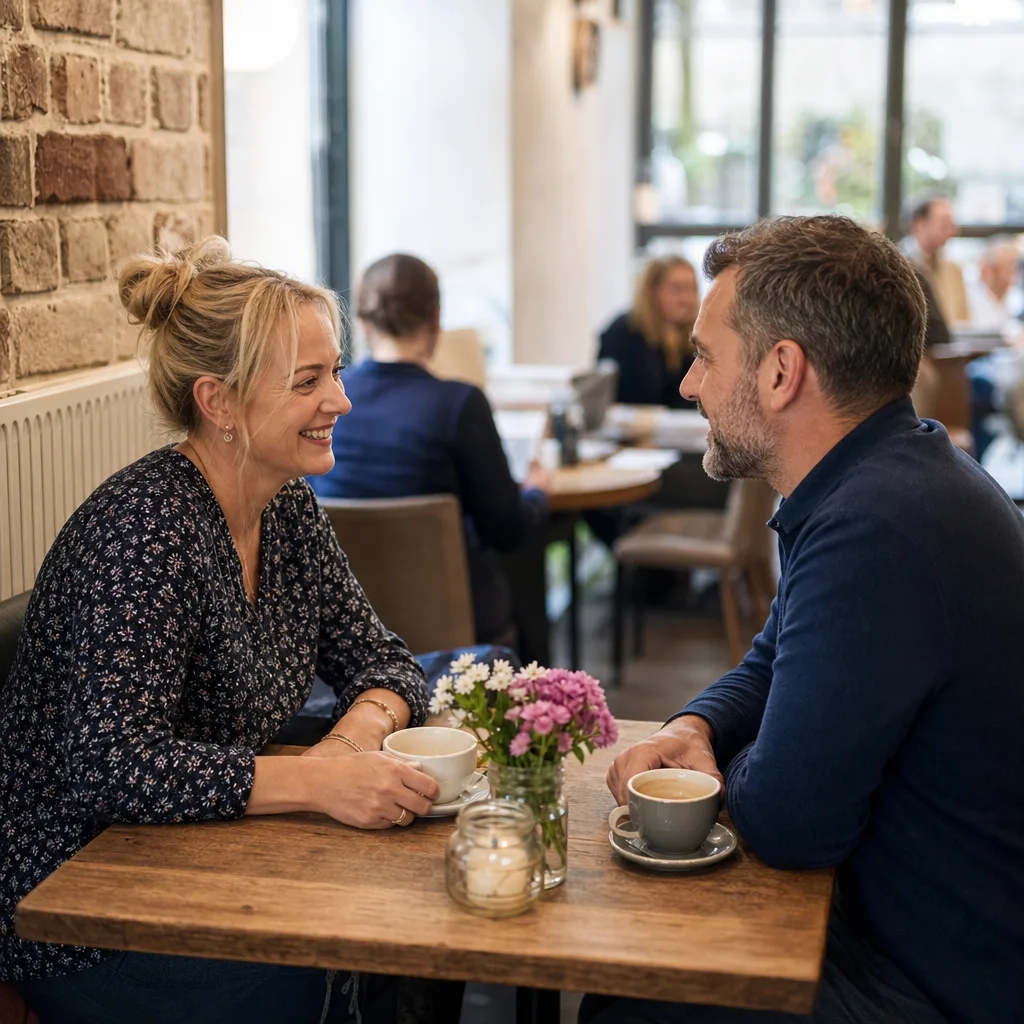
Oxfordshire dater having a brief video call before arranging a meeting

Meeting safely and getting help when something goes wrong

A first date should be easy to enter and easy to leave. That does not make it cold or suspicious. It gives both people room to decide whether the online conversation works face to face.

Where should I meet a date safely in Oxfordshire?

Choose a familiar public place with staff, other people, mobile reception and a dependable route home.

Central Oxford offers obvious daytime choices such as cafés in and around the Covered Market or the public areas of Westgate Oxford. In Banbury, Castle Quay provides staffed venues and transport options nearby. The right choice is not automatically the busiest place in the county, though. It is somewhere practical for both people where neither person becomes dependent on the other for a lift.

For more local suggestions, see our guide to first-date ideas in Oxfordshire. Adapt any idea for safety. A walk can be pleasant after an initial coffee, but an isolated stretch of canal, woodland or countryside is not a strong first meeting point. Save remote routes for a later date, once trust has had time to develop.

  • Meet there. Do not give out your address or accept collection from home for an early date.
  • Control your journey. Know the last bus or train, local taxi options and where you parked before the date begins.
  • Tell one person. Share the match's profile, the venue and the time you expect to check in.
  • Keep the first date bounded. Coffee or one drink creates a natural finishing point without trapping either person in a long meal.
  • Watch your own drink. Buy it directly where possible and do not leave it unattended.
  • Limit alcohol. Keep your judgement clear and retain control of your journey.
  • Carry essentials. Take a charged phone, payment method and enough money to get home independently.

Rural Oxfordshire needs extra planning. Mobile signal may be uneven, buses can be infrequent, and a pub that feels busy at seven may be nearly empty by closing time. Check the return route before leaving home. If you are travelling between places such as Witney, Chipping Norton or smaller villages, do not let the lack of a convenient bus turn a first date into an unwanted lift or overnight stay.

What should I do if I feel uncomfortable during a date?

End the meeting, move towards staff or other people and contact someone you trust; politeness is never more important than leaving safely.

You can say, “I am going to head home now.” That is enough. You do not need to settle an argument about why. If directness feels unsafe, go to the bar, reception desk or till and quietly ask a member of staff for help. Call your check-in contact, order your own taxi or use public transport from a busy stop.

Discomfort is not always dramatic. It may be pressure to drink more, repeated sexual comments, anger when you disagree, attempts to change venues, unwanted touching, or insistence on seeing where you live. One boundary test often leads to another. Leave early rather than waiting for certainty.

If you believe you are being followed, do not go home. Enter a staffed public place or police station if one is accessible, call someone you trust and contact police. Call 999 if there is immediate danger or a crime is happening. Use 101 for non-emergency police matters.

How do I report fraud, threats or sexual harm in Oxfordshire?

Preserve available evidence, report the account to the dating service and contact the appropriate police, fraud or specialist support service.

For suspected fraud in England and Wales, report through Action Fraud using its official website or telephone service. Contact your bank immediately if you sent money or disclosed banking credentials. Speed matters because the bank may be able to secure an account or attempt to trace a payment, although recovery is not guaranteed.

For threats, stalking, assault, blackmail or harassment in Oxfordshire, contact Thames Valley Police. Use 999 in an emergency and 101 when there is no immediate danger. If intimate images have been shared or threatened, keep messages and account details where safe to do so; do not pay a blackmailer or negotiate for deletion.

Victims First supports victims and witnesses across the Thames Valley, including people who have not yet reported to police. Oxfordshire Sexual Abuse and Rape Crisis Centre provides specialist support for women and girls affected by sexual violence. Men and non-binary people can also seek specialist help through national sexual violence services and local NHS sexual assault referral pathways. Use each organisation's official website to check current contact routes and opening hours.

Evidence can include screenshots, profile links, usernames, telephone numbers, email addresses, dates, bank references and a timeline written while events are fresh. Do not keep harmful material circulating merely to prove what happened. Police or specialist advisers can explain what is useful and how to store it.

Reporting is worthwhile even if you feel embarrassed. Romance fraud is engineered through patience, pressure and emotional manipulation. Intelligent, cautious people are targeted because the fraud does not begin with an absurd demand. It begins with attention.

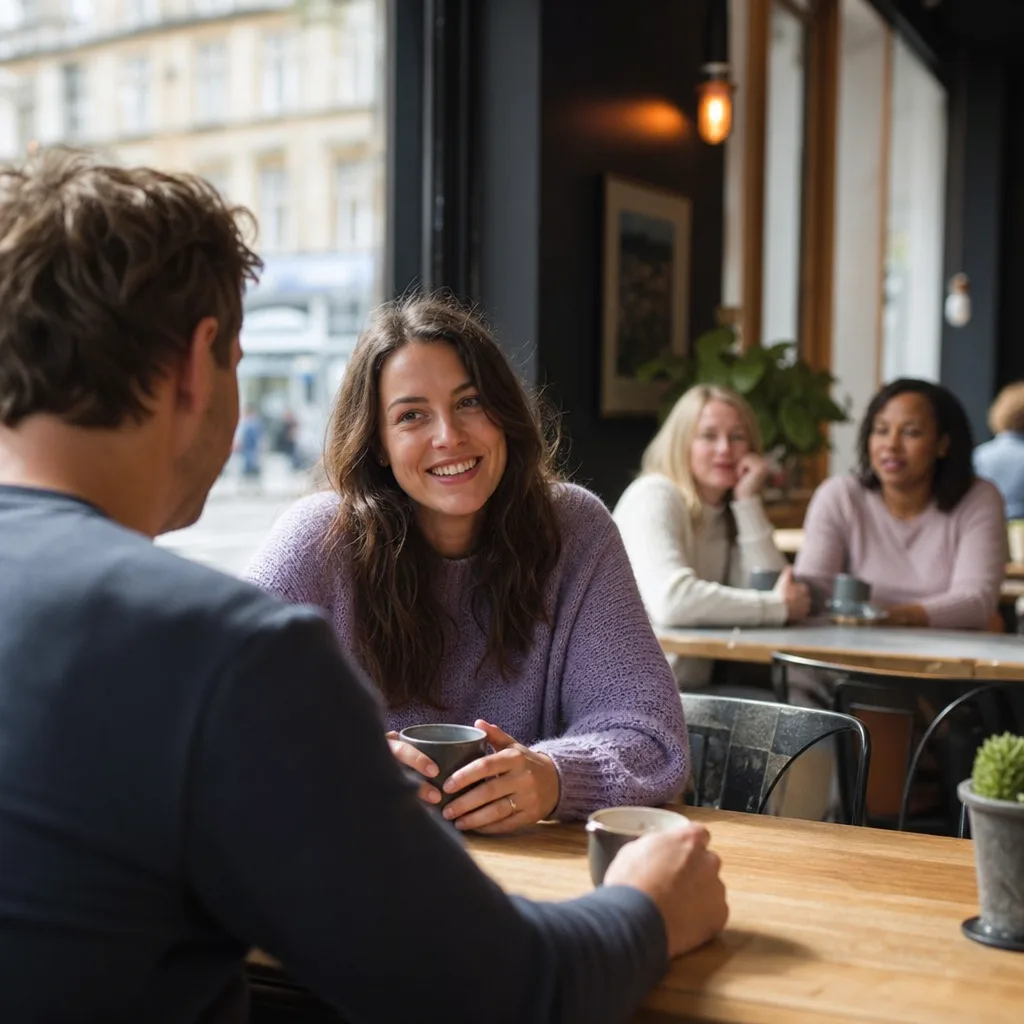
Two adults meeting at a busy public café in central Oxford

Safety is not a single check completed before dating begins. It is a sequence of small decisions: what you publish, where you message, how quickly you trust, where you meet and what you do when a boundary is crossed.

How can I date confidently after a bad experience?

Return at your own pace, tighten the boundaries that help you feel secure and judge each new person by their conduct rather than by pressure to trust quickly.

After fraud, harassment or a frightening meeting, people often replay the conversation and search for the moment they “should have known”. That instinct is understandable but unfair. Responsibility sits with the person who lied, threatened or exploited trust.

You may want to pause your account, change photographs, review privacy settings or ask a trusted friend to look at a new match before you meet. If you are dating again after a long relationship, practise the technical parts separately: learn how to block, report and hide a profile before you need those controls in a stressful moment.

Keep your standards practical. Does the person accept “no” without sulking? Do their plans make sense? Are they comfortable meeting publicly? Do they show interest without demanding constant access to you? Respect is usually visible in small moments long before anyone discusses commitment.

Oxfordshire singles do not all date in one social circle. Oxford's colleges, east Oxford neighbourhoods, the Abingdon and Didcot science corridor, Bicester, Banbury and west Oxfordshire often operate as distinct worlds. That is precisely why local dating can help. Read more about dating across Oxfordshire, or use our guides to dating in Oxford and meeting people in Banbury.

The aim is not perfect certainty. Nobody can obtain that from a profile. The aim is enough control, evidence and time to make the next sensible decision, then the next one after that.

Frequently asked questions

Should I give a dating match my phone number?

Not immediately. Use the dating site's messaging tools until you are comfortable, then consider a call with number-privacy settings enabled. A separate email or dating contact number can keep your main personal accounts private. Block and report anyone who pressures you for contact details.

Is a verified dating profile definitely genuine?

No. Verification may confirm a photograph, telephone number or document, depending on the service, but it does not prove every biographical claim or guarantee good behaviour. Treat it as one useful check and continue looking for consistency, respect and willingness to meet safely.

What should I do if I have sent money to a romance scammer?

Contact your bank or payment provider immediately, preserve messages and transaction details, report the account to the dating service, and submit a report to Action Fraud. Contact Thames Valley Police on 101 if there are threats, stalking or other offences, or call 999 if anyone is in immediate danger.

Meet Oxfordshire singles without rushing trust

Create a free profile, keep control of your personal details and get to know people who are genuinely close enough to meet.

Create my free profile